If you’re working with Liquid Silicone Rubber (LSR), one of the most critical decisions you’ll make is selecting the correct LSR’s shore hardness. This single property dictates the feel, function, and durability of your final product. Choose wrong, and you risk product failure, user discomfort, or manufacturing defects.
This in-depth guide will demystify the shore scale for LSR. We’ll break down what shore hardness means, how it’s measured, and provide a practical framework to help you select the perfect LSR’s shore for your specific application.
Understanding the Basics: What is Shore Hardness?
Before we dive into selection, let’s define our key term. Shore hardness is a standardized measure of the resistance of a material to indentation. Essentially, it tells us how “soft” or “hard” a material is. The scale was developed by Albert Ferdinand Shore, and for elastomers like LSR, the most common scale is the Shore A Scale.
Think of it this way:
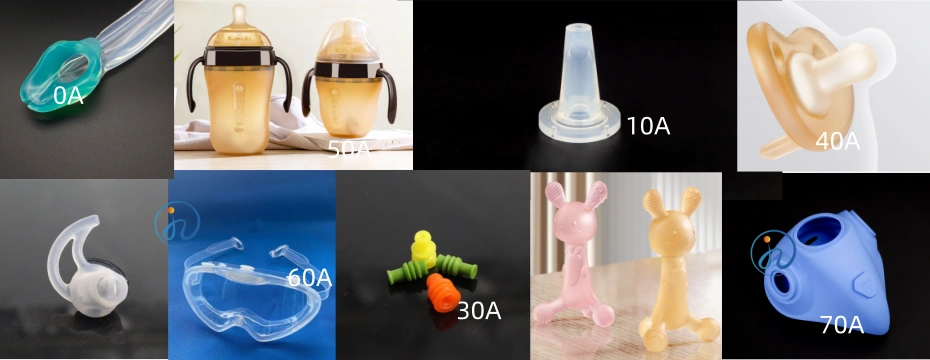
- Low Shore A (e.g., 10A-30A): Very soft, gel-like, highly flexible.
- Medium Shore A (e.g., 40A-60A): The most common range; a flexible but substantial feel, like a car tire or a shoe sole.
- High Shore A (e.g., 70A-90A): Firm, with limited flexibility, approaching a rigid plastic feel.
For very rigid plastics, the Shore D scale is used, but LSR almost exclusively uses the Shore A scale.
Why Getting the Right LSR’s Shore Hardness is Non-Negotiable
Selecting the correct LSR’s shore is not just about preference; it’s about performance. The right hardness ensures:
- Functional Integrity: A seal must compress to be effective; a button must have tactile feedback.
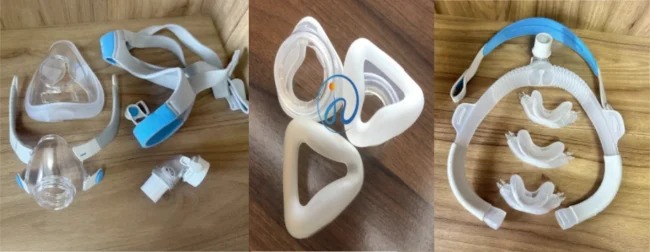
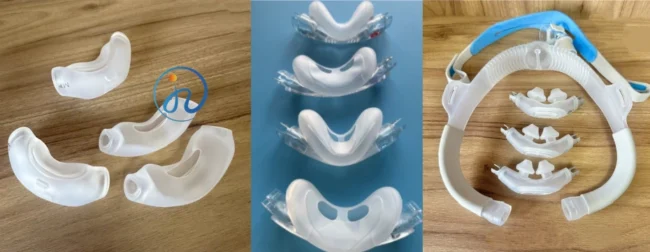
- User Experience & Safety: A baby pacifier must be soft and gentle; a medical mask must form a comfortable seal without causing pressure sores.
- Manufacturing Success: The wrong hardness can lead to issues like tearing during demolding, flashing, or incomplete filling of the mold.
- Product Longevity: A material that’s too soft for the application may tear or deform permanently under stress.
A Practical Guide: How to Choose Your LSR’s Shore
Follow this step-by-step process to narrow down your ideal hardness range.
Step 1: Define the Primary Function of Your Part
Ask yourself: What is the absolute most important job this LSR component must do?
- Is it a Seal or Gasket? (Requires compression)
- Key Need: The material must compress to create a tight barrier against environmental elements (water, dust, air). Softer materials compress more easily.
- Recommended LSR’s Shore Range: 20A to 50A. The exact choice depends on the sealing force and the surface roughness of the mating parts.
- Is it a Comfortable, Conforming Product? (Direct skin contact)
- Key Need: It must feel pleasant against the skin and conform to the body’s contours without causing discomfort.
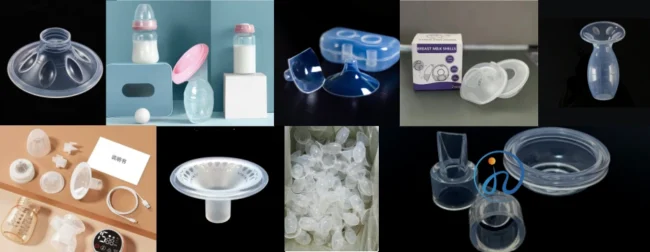
- Recommended LSR’s Shore Range: 10A to 30A. This gel-like range is ideal for products like wearable device straps, baby bottle nipples, and massage rollers.
- Is it a Button or Keypad? (Requires tactile response)
- Key Need: It must deform under finger pressure to activate a switch and then spring back immediately. It needs a “snappy” feel.
- Recommended LSR’s Shore Range: 40A to 60A. This range provides the perfect balance of flexibility for pressing and rigidity for a crisp, responsive return.
- Is it a Structural Component? (Requires rigidity and shape retention)
- Key Need: It must hold its shape under load, provide support, or house other components.
- Recommended LSR’s Shore Range: 70A to 80A. At this hardness, LSR is firm and offers excellent dimensional stability while retaining some impact resistance.
Step 2: Consider the Mechanical and Environmental Stresses
Now, refine your choice based on the operating conditions.
- Tear & Abrasion Resistance: Softer grades (e.g., 10A-30A) are generally more prone to tearing if nicked or stretched. If your part will experience friction or potential snagging, a harder grade like 50A or above will be more durable.
- Compression Set: This measures how well a material returns to its original thickness after being compressed. For a part that is constantly under compression (like a permanent seal), you need an LSR with a low compression set value at your chosen shore hardness. Generally, higher shore hardness materials exhibit better long-term recovery.
- Temperature & Chemical Exposure: While LSR is inherently stable across a wide temperature range, the LSR’s shore hardness can slightly change at temperature extremes. Consult with your LSR material supplier on how specific grades perform under your expected conditions.
Step 3: Don’t Forget the Manufacturing Process: Injection Molding
The chosen LSR’s shore impacts the injection molding process.
- Flowability: Softer LSR grades (lower Shore A) are generally less viscous and flow more easily into thin walls and complex mold geometries.
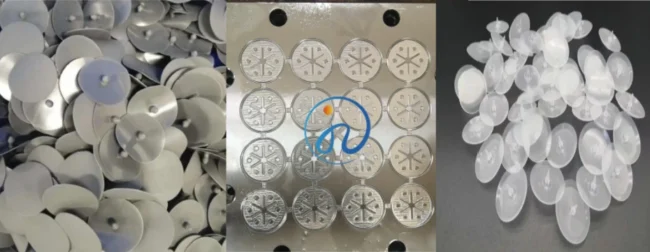
- Demolding: Very soft parts (e.g., 10A-20A) can be delicate and difficult to eject from the mold without tearing. A slightly higher hardness can significantly improve manufacturability.
- Flash: Softer materials can more easily be forced into microscopic gaps in the mold tool, creating thin, unwanted flash that is hard to remove.
LSR Shore Hardness Reference Table by Application
| Application Category | Specific Examples | Recommended Shore A Range | Rationale |
|---|---|---|---|
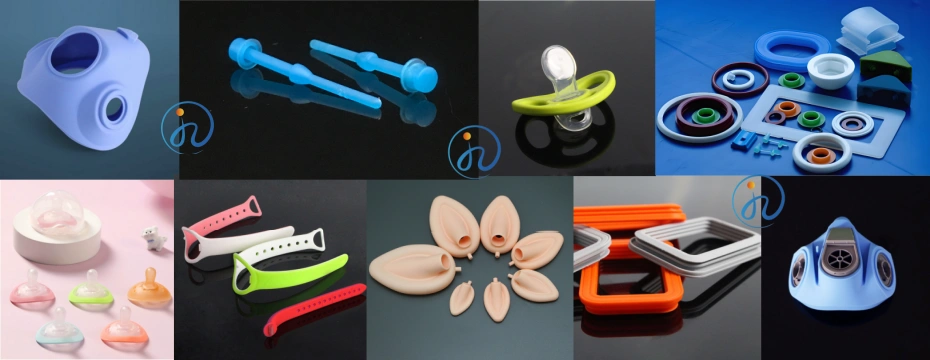
| Medical & Healthcare | Baby Bottle Nipples, Respiratory Masks, Cosmetic Applicators | 10A – 30A | Extreme softness for comfort, biocompatibility, and skin conformity. |
| Wearables & Consumer | Smartwatch Bands, Earbud Tips, Phone Cases | 20A – 50A | Balances softness for comfort with durability for daily use. |
| Seals & Gaskets | O-rings, Electrical Connector Seals, Kitchenware Lids | 30A – 60A | Provides the necessary compression and environmental sealing. |
| Automotive | Seals, Vibration Dampers, Key Fob Buttons | 40A – 70A | Withstands higher stress, temperature fluctuations, and provides tactile feedback. |
| Industrial | Keypads, Rollers, Bumpers, Electrical Insulators | 50A – 80A | Prioritizes durability, tear resistance, and structural integrity. |
Pro Tips and Common Pitfalls to Avoid
- Get Physical Samples: Never finalize a LSR’s shore based on a datasheet alone. Order material samples or 3D-printed molds with different hardnesses. Feel them, bend them, and test them in a prototype if possible.
- Consider the Wall Thickness: A thick-walled part made from a 50A material will feel softer and more flexible than a thin-walled part made from the same material. Design and hardness are intrinsically linked.
- Work With Your Molder and Material Supplier Early: They are your greatest resource. They can provide data on flow, cure time, and real-world performance for different shore grades and can help you avoid costly mistakes.
- Don’t Chase the Softest Option Blindly: While a 10A gel is incredibly soft, it may not be functional for your application. Always prioritize the function from Step 1.
Conclusion: Your Selection Checklist
Choosing the right LSR’s shore hardness is a systematic process. Before you commit, run through this final checklist:
- Primary Function: [ ] Sealing [ ] Tactile Feedback [ ] Comfort [ ] Structural Support
- User Interaction: How will the user touch and use the part?
- Mechanical Stress: Will it be stretched, compressed, or abraded?
- Manufacturing Feasibility: Have I consulted with my molding partner about demolding and flow for this hardness?
- Physical Validation: Do I have a physical sample in hand to test?
By following this guide, you move from guesswork to a confident, data-driven decision. The perfect LSR’s shore is out there—it just takes a methodical approach to find it.