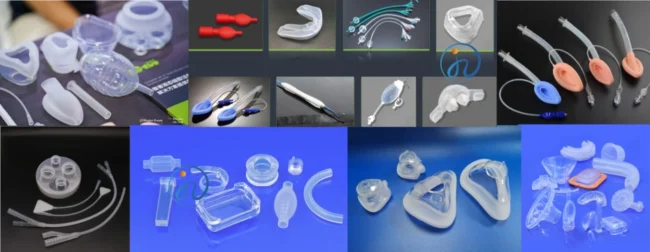
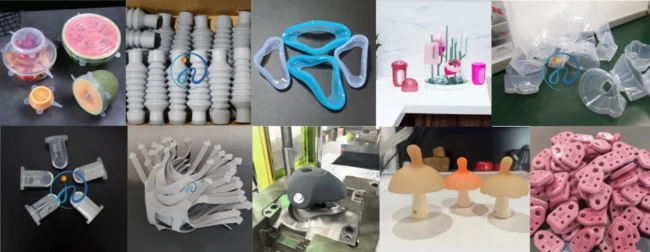
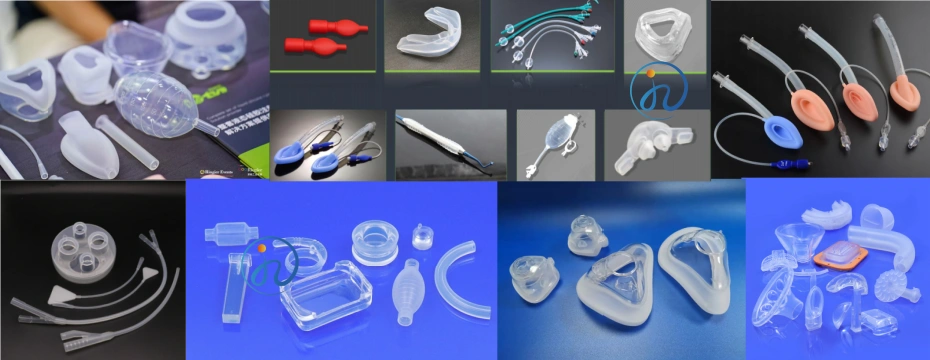
Medical-grade silicone devices are used in healthcare applications due to their biocompatibility, flexibility, durability, and resistance to extreme conditions. From catheters and seals to implants and wearable medical components, silicone plays a critical role in modern medical device manufacturing.
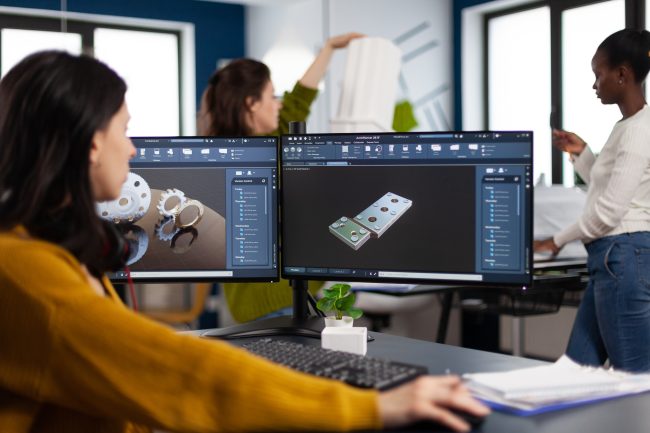
If you are an OEM, product designer, or procurement specialist, understanding how to manufacture medical-grade silicone devices is essential for ensuring quality, compliance, and cost efficiency.
1. What Is a Medical-Grade Silicone Device?
A medical-grade silicone device is a product made from specially formulated silicone that meets strict regulatory and biocompatibility standards. These materials are designed to be safe for contact with human tissue or fluids.
Key Characteristics:
- Biocompatibility (ISO 10993 / USP Class VI)
- Non-toxic and hypoallergenic
- Excellent thermal stability
- High flexibility and elasticity
- Chemical and UV resistance
Common Applications:
- Catheters and tubing
- Seals and gaskets
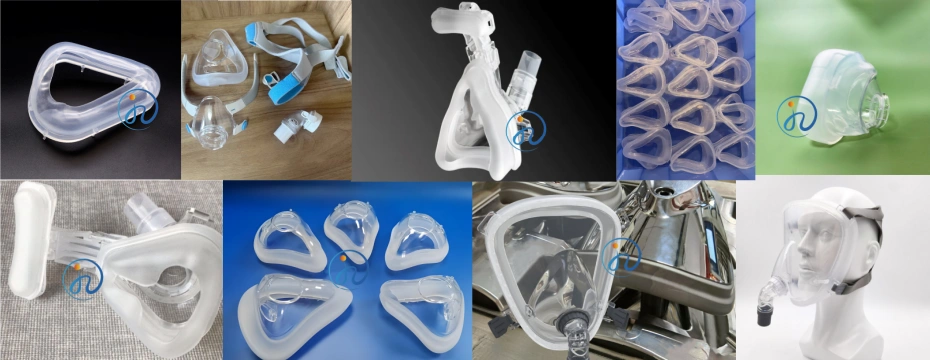
- Respiratory masks
- Surgical instruments
- Implantable components
- Wearable medical devices
2. Types of Medical-Grade Silicone Materials
Choosing the right silicone material is the first step in manufacturing.
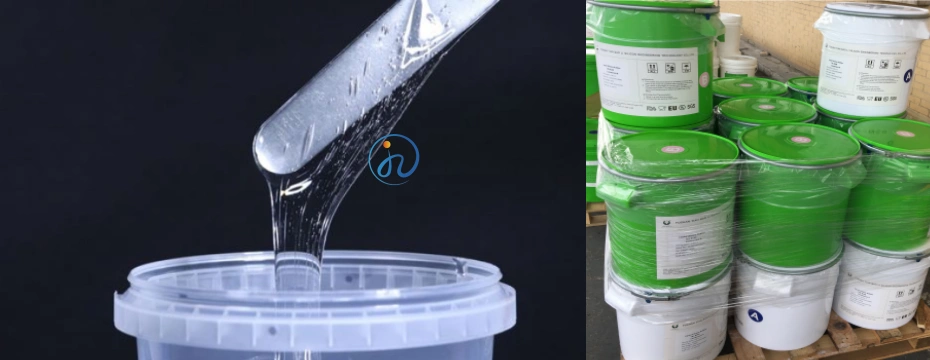
2.1 Liquid Silicone Rubber (LSR)
- Ideal for injection molding
- High precision and consistency
- Suitable for high-volume production
- Common in complex medical components
Material Selection Considerations:
- Regulatory compliance requirements
- Mechanical properties (hardness, tensile strength)
- Transparency or color needs
- Sterilization compatibility (autoclave, gamma, EtO)
3. Design for Manufacturability (DFM)
Before production begins, proper design optimization is crucial.
Key Design Guidelines:
- Uniform wall thickness to prevent defects
- Avoid sharp corners (use radii)
- Consider parting lines and mold flow
- Optimize draft angles for demolding
- Design for minimal material waste
Why DFM Matters:
- Reduces production cost
- Improves product quality
- Shortens development cycle
- Minimizes defects like air traps or flash
Collaborating with an experienced silicone manufacturer during this stage is highly recommended.
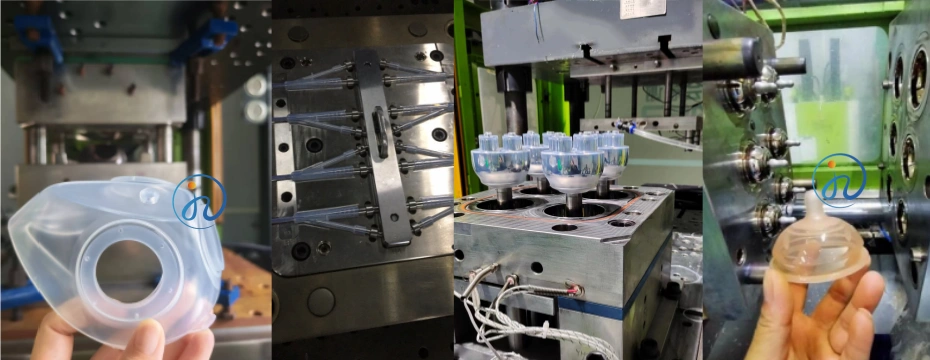
4. Tooling & Mold Development
The mold plays a critical role in determining the quality and precision of medical silicone devices.
Types of Molds:
- Cold runner systems (for LSR)
- Hot runner systems (for high efficiency)
- Multi-cavity molds (for mass production)
Tooling Considerations:
- Medical-grade stainless steel (e.g., S136, H13)
- High precision machining (CNC, EDM)
- Mirror polishing for smooth surfaces
- Venting design to avoid air bubbles
Validation:
- Mold flow analysis
- Trial runs (T0, T1 samples)
- Dimensional inspection
5. Manufacturing Process of Medical-Grade Silicone Devices
5.1 Liquid Silicone Rubber Injection Molding (LSR)
This is the most widely used method.
Process Steps:
- Two-component LSR mixing (A + B)
- Injection into a heated mold
- Rapid curing (vulcanization)
- Automatic demolding
Advantages:
- High precision
- Repeatability
- Clean and automated production
- Suitable for complex geometries
5.2 Overmolding Process
Used when combining silicone with plastic or metal.
Applications:
- Medical handles
- Sealed electronic devices
- Multi-material components
6. Cleanroom Manufacturing Requirements
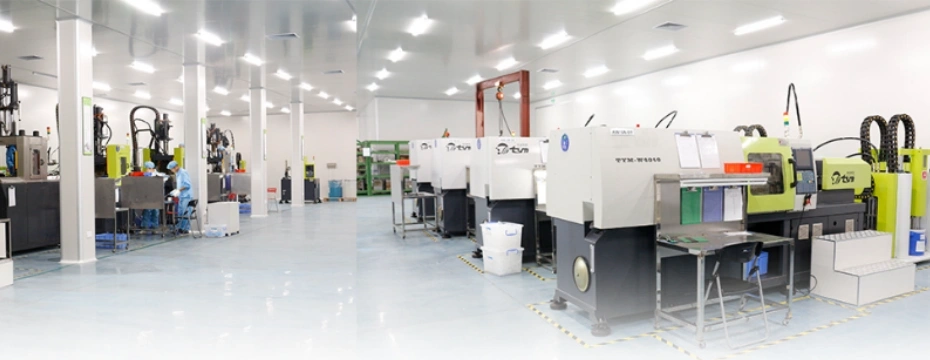
Medical-grade silicone devices must be produced in controlled environments.
Cleanroom Standards:
- ISO Class 7 or ISO Class 8
- Controlled temperature and humidity
- HEPA filtration systems
Benefits:
- Prevent contamination
- Ensure product safety
- Meet regulatory compliance
7. Post-Processing & Secondary Operations
After molding, additional steps may be required.
Common Processes:
- Deflashing (manual or cryogenic)
- Surface treatment
- Laser marking or printing
- Bonding or assembly
- Cutting or trimming
Clean Handling:
All post-processing should maintain medical-grade cleanliness standards.
9. Quality Control & Testing
Quality assurance is critical in medical device manufacturing.
Key Tests:
- Biocompatibility testing (ISO 10993)
- Mechanical testing (tensile, elongation)
- Dimensional inspection (CMM, optical)
- Visual inspection
- Aging and durability testing
Documentation:
- IQ, OQ, PQ validation
- Batch traceability
- Material certification
11. Cost Factors in Manufacturing Medical Silicone Devices
Understanding cost drivers helps optimize your project.
Main Cost Components:
- Material cost (medical-grade silicone is premium)
- Tooling and mold development
- Production volume
- Cleanroom operation
- Testing and certification
Cost Optimization Tips:
- Design for manufacturability
- Choose the right process (LSR vs compression)
- Optimize mold cavities
- Work with experienced suppliers
12. How to Choose the Right Manufacturer
Selecting a reliable partner is critical for success.
Key Criteria:
- Experience in medical silicone manufacturing
- Cleanroom capabilities
- Certifications (ISO 13485)
- Engineering support (DFM, prototyping)
- Quality control systems
- Global export experience
Questions to Ask:
- Can you support low-volume prototyping?
- What sterilization compatibility do you offer?
- Do you provide full documentation and traceability?
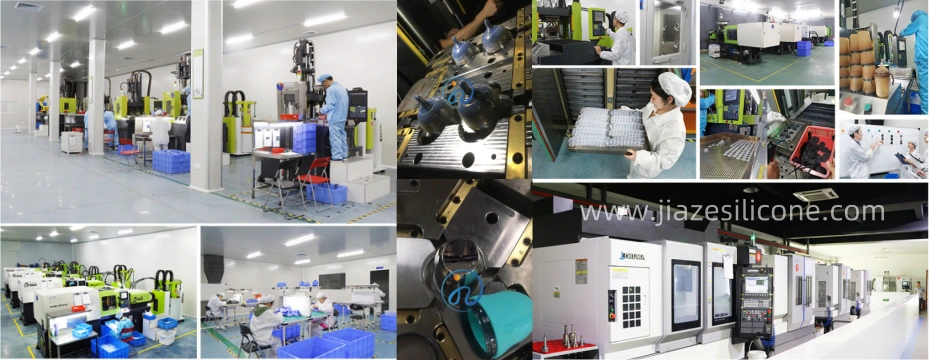
Conclusion
Manufacturing medical-grade silicone devices is a highly specialized process that requires expertise in materials, tooling, cleanroom production, and regulatory compliance.
By following a structured approach—from material selection and design optimization to precision molding and quality assurance—manufacturers can produce high-performance, reliable medical components that meet global standards.
For OEMs and engineers, partnering with an experienced silicone manufacturer is the key to reducing risk, improving efficiency, and accelerating time to market.