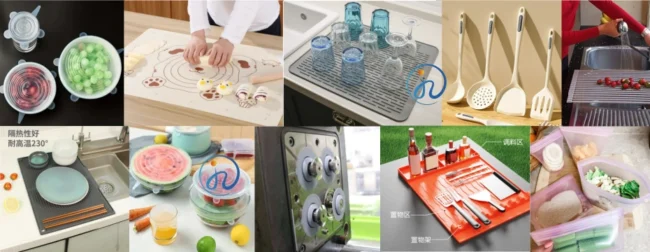
Liquid silicone kitchen products have become increasingly popular in modern households due to their safety, durability, flexibility, and eco-friendly properties. From baking molds and spatulas to baby feeding accessories, liquid silicone rubber (LSR) is now a preferred material for food-contact applications.
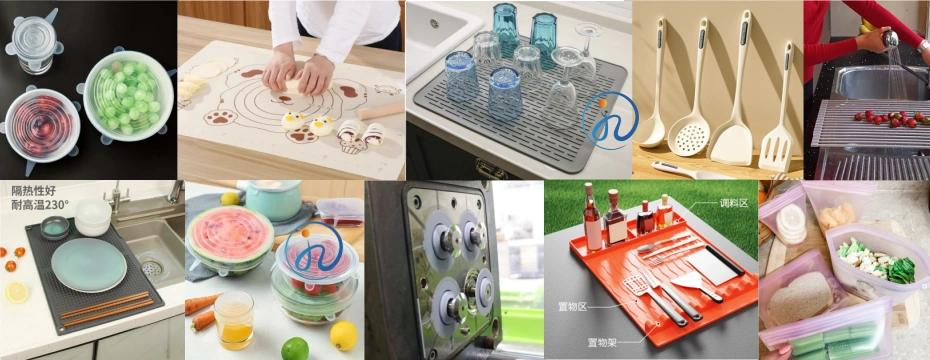
For brands, wholesalers, and product designers, understanding how to produce liquid silicone kitchen products is essential for ensuring product quality, safety compliance, and cost efficiency.
1. What Are Liquid Silicone Kitchen Products?
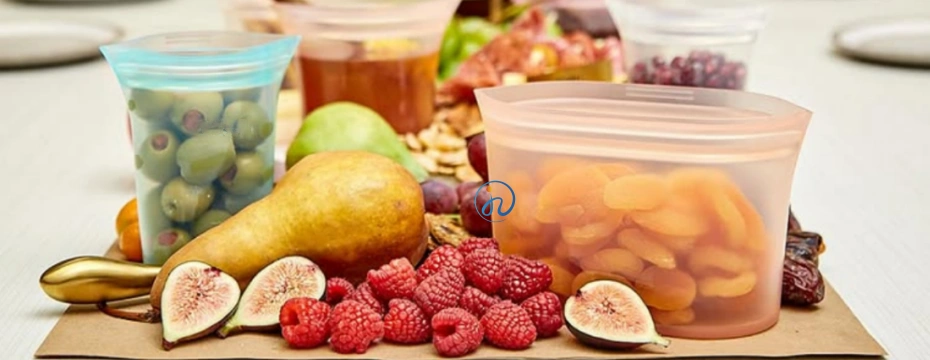
Liquid silicone kitchen products are items manufactured using food-grade liquid silicone rubber (LSR) through precision molding processes. These products are used in cooking, baking, and food storage.
Common Products Include:
- Silicone baking molds
- Spatulas and brushes
- Ice cube trays
- Baby feeding utensils
- Heat-resistant mats
- Food storage lids
2. Why Choose Liquid Silicone for Kitchen Products?
LSR offers significant advantages over traditional materials like plastic or metal.
Key Benefits:
- Food Safety: Complies with FDA and LFGB standards
- High Temperature Resistance: Typically withstands -40°C to 230°C
- Flexibility & Durability: Long lifespan without deformation
- Non-Toxic & Odorless
- Non-Stick Surface
- Dishwasher Safe
- Eco-Friendly & Recyclable
These properties make liquid silicone ideal for direct food-contact applications.
3. Raw Material Selection for Food-Grade Silicone
Material selection is the foundation of product quality.
Types of Silicone Used:
- Food-grade LSR (FDA-approved)
- Platinum-cured silicone (preferred for safety and purity)
Key Considerations:
- Certification requirements (FDA, LFGB)
- Transparency or color customization
- Hardness (Shore A range)
- Heat resistance
- Mechanical strength
Why Platinum-Cured Silicone?
- No harmful by-products
- Superior clarity and strength
- Better aging resistance
4. Product Design & Development
Guidelines of Design:
- Uniform wall thickness for consistent curing
- Smooth edges to improve safety and aesthetics
- Adequate draft angles for easy demolding
- Reinforced structures for durability
- Ergonomic design for user comfort
Design for Manufacturability (DFM):
Working with a manufacturer early helps:
- Reduce defects
- Optimize mold structure
- Lower production costs
- Improve product performance
5. Tooling & Mold Making
High-quality molds are essential for precision and efficiency.
Mold Materials:
- Hardened steel (e.g., S136, H13)
- Stainless steel for food-grade compliance
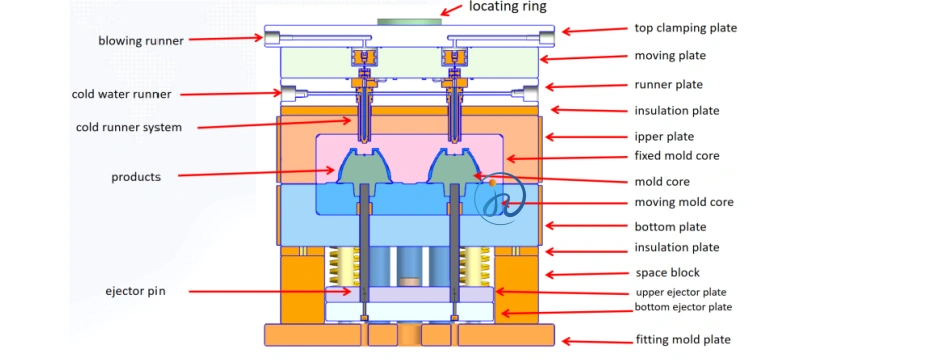
Mold Types:
- Single-cavity molds (low volume)
- Multi-cavity molds (mass production)
- Cold runner systems (for LSR)
Key Features:
- Mirror polishing for smooth surfaces
- Venting systems to avoid air bubbles
- Precision CNC machining
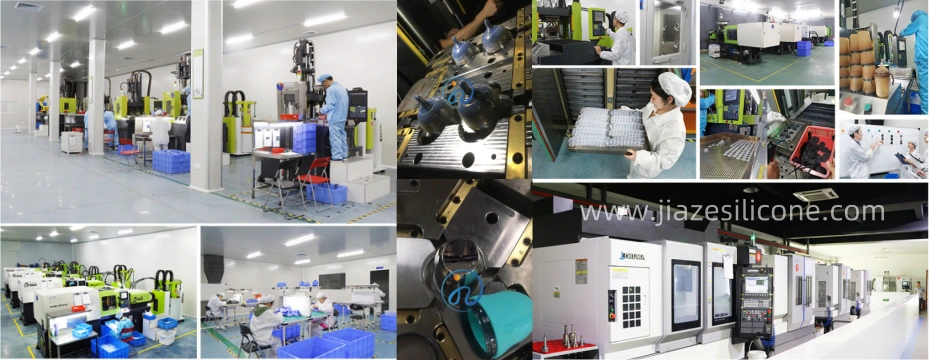
6. Liquid Silicone Injection Molding Process
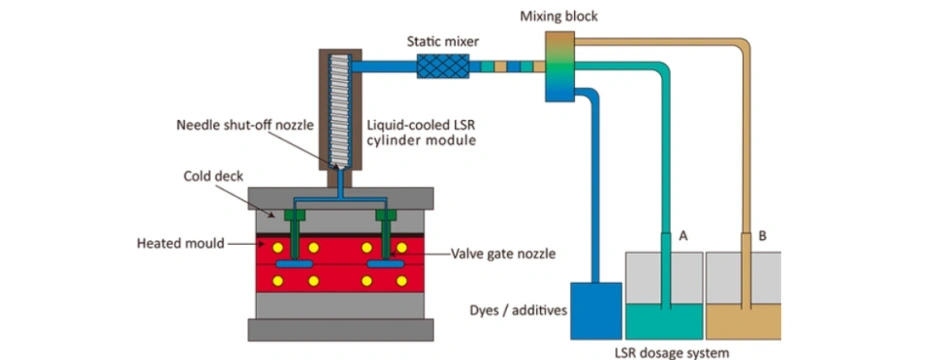
LSR injection molding is the primary production method.
Step-by-Step Process:
1. Material Preparation
Two-component liquid silicone (Part A and Part B) is stored separately and mixed before injection.
2. Injection
The mixed material is injected into a heated mold under pressure.
3. Curing
Silicone undergoes vulcanization at high temperatures, forming a solid elastic product.
4. Demolding
Finished parts are automatically or manually removed from the mold.
Advantages of LSR Injection Molding:
- High precision and consistency
- Suitable for complex designs
- High production efficiency
- Low material waste
- Automation-friendly
7. Quality Control in Production
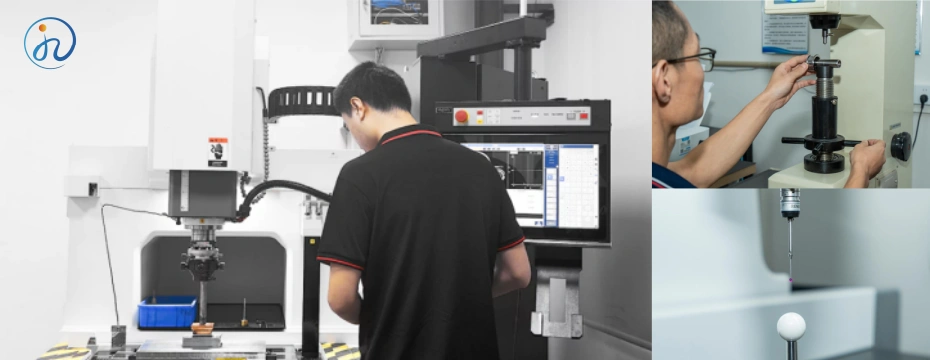
Strict quality control ensures consistency and safety.
Inspection Methods:
- Visual inspection
- Dimensional measurement
- Mechanical testing
- Batch traceability
Key Quality Indicators:
- No bubbles or impurities
- Consistent hardness
- Accurate dimensions
- Clean surface finish
8. Packaging & Logistics
Proper packaging protects product quality and enhances brand value.
Packaging Options:
- PE bags (basic protection)
- Retail packaging (boxes, blister packs)
- Eco-friendly packaging
Considerations:
- Food-safe packaging materials
- Moisture and dust protection
- Branding and labeling
9. Cost Factors in Silicone Kitchen Product Manufacturing
Understanding costs helps optimize your sourcing strategy.
Main Cost Drivers:
- Raw material (LSR cost)
- Mold/tooling investment
- Production volume
- Labor and automation level
- Packaging requirements
Cost Reduction Tips:
- Optimize product design
- Use multi-cavity molds
- Increase order volume
- Work with experienced manufacturers
10. How to Choose a Reliable Manufacturer
Selecting the right supplier is crucial for long-term success.
Key Criteria:
- Experience in LSR kitchen products
- Food-grade certifications
- Strong engineering support
- Advanced production equipment
- Strict quality control system
Questions to Ask:
- Can you provide FDA/LFGB certificates?
- Do you support custom branding?
- What is your MOQ?
- Can you assist with product design?
Conclusion
Producing liquid silicone kitchen products involves a highly controlled process that combines material science, precision engineering, and strict quality standards.
From selecting food-grade silicone to optimizing mold design and ensuring compliance, every step plays a critical role in delivering safe, durable, and high-performance kitchen products.
For brands and buyers, working with a professional silicone manufacturer can significantly improve product quality, reduce costs, and accelerate time to market.