Liquid Silicone Rubber (LSR) has become one of the most important materials used in modern manufacturing. From medical devices and baby products to automotive seals and consumer electronics, LSR provides excellent flexibility, durability, and biocompatibility.
However, many companies require custom LSR solutions rather than standard components. Product designers and purchasing managers often need specific shapes, materials, or performance requirements that can only be achieved through customized manufacturing.
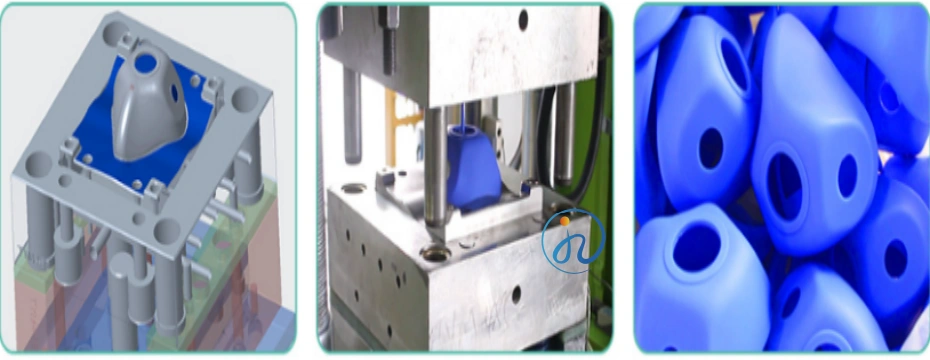
So how do professional manufacturers provide custom LSR solutions efficiently and reliably?
This guide explains the full process—from concept development to mass production—helping businesses understand how a qualified LSR manufacturer transforms ideas into high-quality silicone products.
What Are Custom LSR Solutions?
Custom LSR solutions refer to the complete manufacturing service for producing tailor-made liquid silicone rubber parts according to a customer’s design requirements.
Unlike standard silicone products, custom solutions involve:
- Unique product designs
- Specialized silicone material selection
- Custom mold development
- Precision injection molding
- Product testing and validation
These services are commonly required in industries such as:
- Medical devices
- Baby care products
- Wearable electronics
- Automotive components
- Food-grade consumer products
- Industrial sealing solutions
A professional LSR manufacturer works closely with customers to optimize product performance, manufacturability, and cost efficiency.
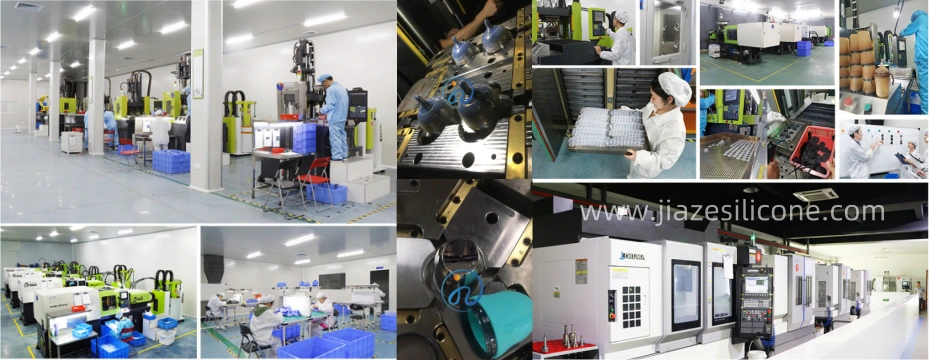
Why Companies Need Custom LSR Solutions
Many industries rely on LSR because of its exceptional material properties. But most real-world applications require customized engineering solutions.
Here are the main reasons companies choose custom LSR services.
Unique Product Design
Standard silicone parts rarely meet specific design needs. Custom LSR solutions allow manufacturers to create:
- Complex geometries
- Micro-precision components
- Thin-wall silicone parts
- Multi-cavity molded products
This flexibility enables engineers to design products without material limitations.
High Performance Requirements
Different applications require different silicone properties such as:
- Heat resistance
- Chemical resistance
- Biocompatibility
- Food safety certification
- UV resistance
Custom material formulation ensures the silicone meets industry standards and performance requirements.
Integration With Other Materials
Many products combine silicone with plastics or metals. Through LSR overmolding technology, manufacturers can integrate silicone with materials like:
- PPSU
- PC
- PA
- ABS
- Stainless steel
This enables multi-functional products with improved sealing, grip, or insulation.
The Process of Providing Custom LSR Solutions
Delivering successful custom LSR products requires a structured engineering process. Professional manufacturers typically follow several key steps.
1. Product Design and Engineering Support
The first step in providing custom LSR solutions is design collaboration between the customer and the manufacturer.
Engineers review the product concept and provide recommendations regarding:
- Wall thickness optimization
- Draft angles for mold release
- Gate location
- Parting line design
- Venting structure
- Shrinkage compensation
Design for Manufacturing (DFM) analysis helps ensure that the product can be efficiently produced with LSR injection molding.
Early engineering support significantly reduces project risk and development time.
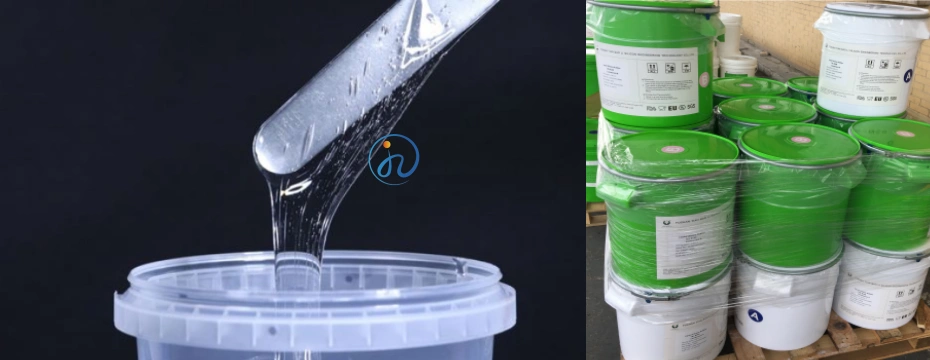
2. Selecting the Right Liquid Silicone Material
Material selection is one of the most important factors in custom LSR manufacturing.
Different silicone grades provide different characteristics.
Common types include:
Medical Grade LSR
Used for healthcare applications such as:
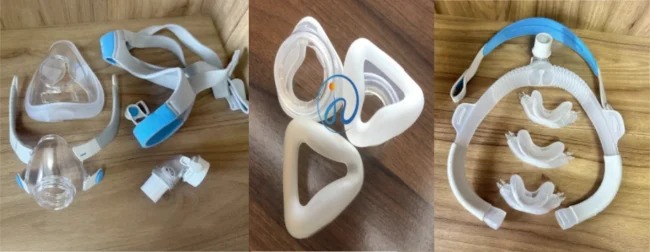
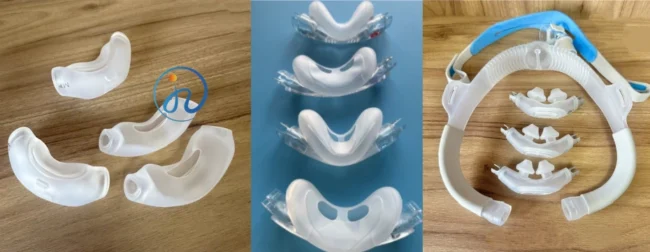
- Respiratory masks
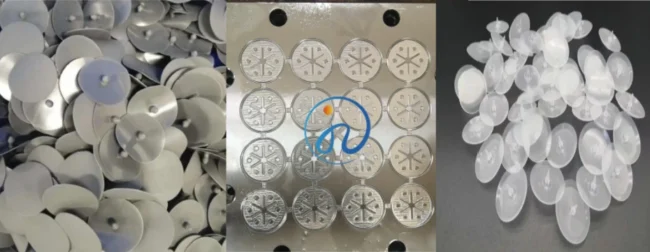
- Medical valves
- Catheter components
- Implantable devices
These materials comply with standards like:
- ISO 10993
- USP Class VI
- FDA requirements
Food Grade LSR
Widely used in baby products and kitchenware, including:
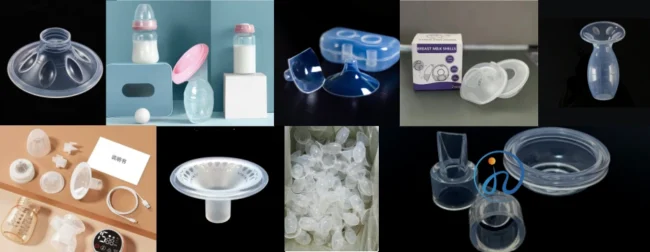
- Baby bottle nipples
- Pacifiers
- Feeding accessories
- Silicone cooking tools
These materials must meet FDA or LFGB food safety regulations.
Industrial Grade LSR
Used in demanding environments such as:
- Automotive seals
- Electronic connectors
- Waterproof gaskets
- Insulation components
Material hardness typically ranges from Shore A 10 to Shore A 80, depending on the application.
3. Rapid Prototyping of Silicone Parts
Before investing in mass production tooling, manufacturers often create LSR prototypes.
Prototyping methods include:
- 3D printed molds
- CNC machined prototype molds
- Silicone vacuum casting
Prototypes allow engineers to evaluate:
- Product appearance
- Mechanical performance
- Assembly compatibility
- Functional testing
This step helps avoid costly design changes after tooling production begins.
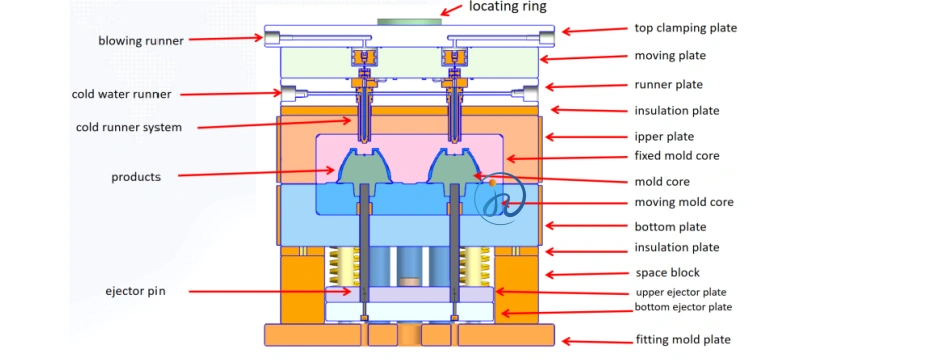
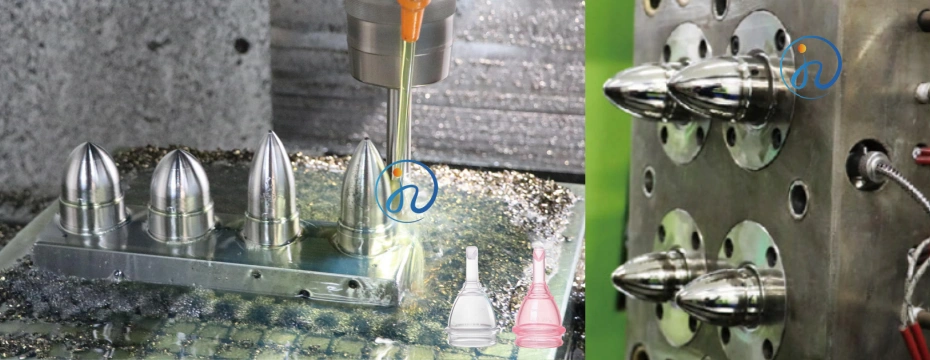
4. Custom LSR Mold Design and Manufacturing
Once the design is finalized, manufacturers develop a custom injection mold specifically for the product.
LSR mold design requires specialized engineering knowledge because liquid silicone behaves differently from thermoplastics.
Key mold features include:
Cold Runner System
LSR molds often use a cold runner system to maintain material temperature and reduce waste.
High-Precision Cavities
Medical and micro-LSR products require extremely tight tolerances.
Typical tolerances may reach:
±0.02 mm to ±0.05 mm depending on the product design.
Vacuum Mold Technology
Vacuum systems remove trapped air inside the mold cavity, preventing defects such as:
- Air bubbles
- Short shots
- Surface imperfections
Precision tooling ensures stable and repeatable production.
5. LSR Injection Molding Production
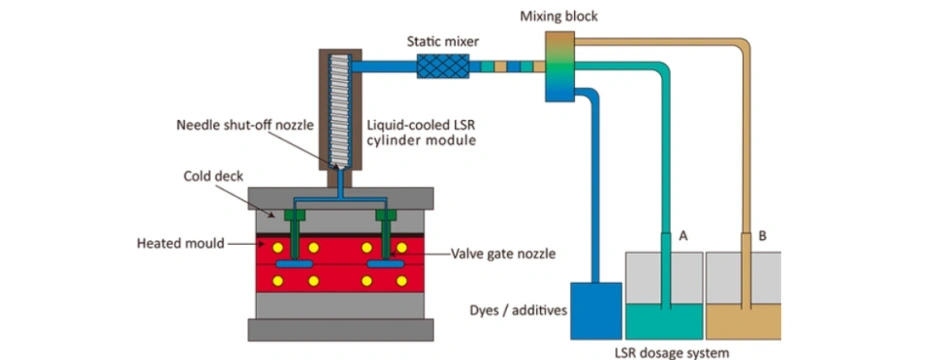
After mold completion, manufacturers begin liquid silicone rubber injection molding.
The process involves several stages.
Material Metering and Mixing
LSR is supplied as two components:
- Part A
- Part B
A dosing system mixes them at a precise 1:1 ratio before injection.
Injection and Curing
The liquid silicone is injected into a heated mold cavity where it cures rapidly under high temperature.
Typical parameters include:
- Mold temperature: 160°C – 200°C
- Injection pressure: 100 – 200 bar
- Cure time: 20 – 60 seconds
Demolding
Once cured, the silicone part is automatically removed using:
- robotic systems
- air ejection
- automated demolding devices
Automation improves consistency and production efficiency.
6. Secondary Processing and Assembly
Some custom LSR products require additional processes after molding.
These may include:
- trimming or deflashing
- surface treatment
- printing or laser marking
- bonding with plastic components
- assembling multiple parts
For example, baby feeding products may require cleanroom assembly to ensure hygiene and safety.
7. Quality Inspection and Certification
Quality control is essential when delivering custom LSR solutions, especially for medical or food applications.
Typical quality inspection methods include:
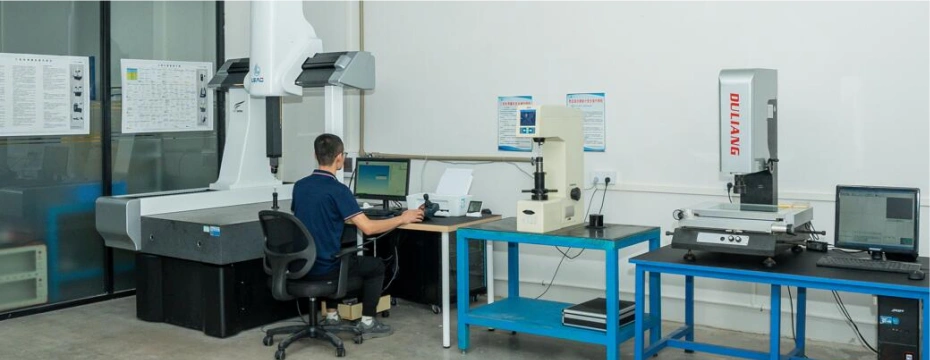
Dimensional Inspection
Using precision equipment such as:
- optical measurement systems
- coordinate measuring machines (CMM)
Material Testing
Silicone properties may be verified through:
- hardness testing
- tensile strength testing
- elongation testing
Functional Testing
Products are tested to confirm:
- sealing performance
- durability
- temperature resistance
- chemical compatibility
Manufacturers may also operate under quality systems such as:
- ISO 9001
- ISO 13485 (medical manufacturing)
Industries That Use Custom LSR Solutions
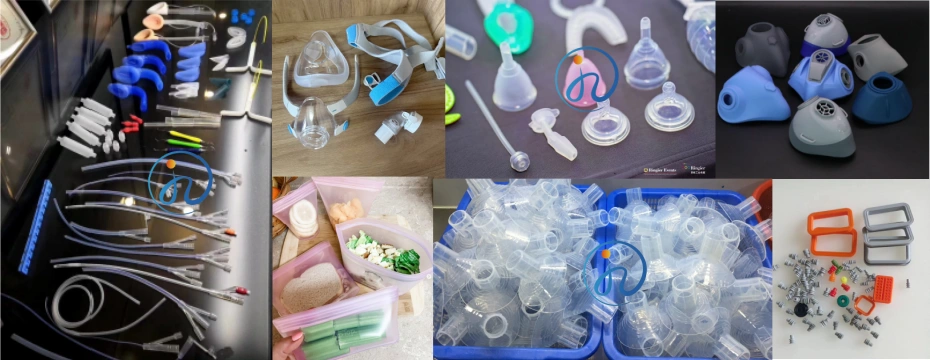
Because of its excellent material properties, LSR is used across many industries.
Medical Industry
Custom LSR components include:
- medical masks
- valve diaphragms
- syringe seals
- surgical instrument parts
LSR is ideal for medical applications because it is biocompatible, sterilizable, and chemically stable.
Baby Care Products
LSR is widely used in baby products due to its safety and softness.
Examples include:
- baby nipples
- pacifiers
- feeding valves
- teething toys
These products require strict compliance with FDA and LFGB standards.
Consumer Electronics
Electronics manufacturers use LSR for:
- waterproof seals
- button keypads
- wearable device components
- protective covers
LSR provides excellent environmental resistance and flexibility.
Automotive Applications
Automotive manufacturers rely on silicone for components exposed to high temperatures.
Typical products include:
- engine seals
- connectors
- vibration dampers
- sensor gaskets
LSR maintains stable performance under extreme conditions.
Conclusion
Providing custom LSR solutions requires a combination of engineering expertise, advanced tooling, precision injection molding, and strict quality control.
From initial product design and material selection to mold manufacturing and mass production, each step plays a critical role in delivering high-performance silicone components.
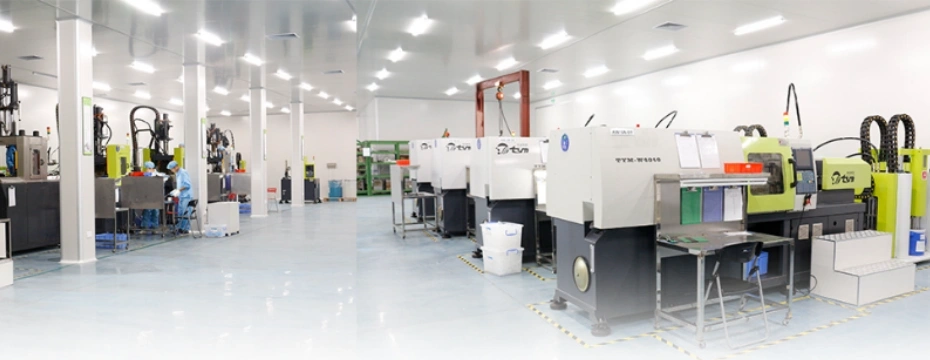
By partnering with an experienced LSR manufacturer, companies can successfully transform innovative product ideas into reliable and scalable silicone solutions.
As industries continue to demand safer, more durable, and more complex products, custom liquid silicone rubber manufacturing will remain a key technology for modern product development.