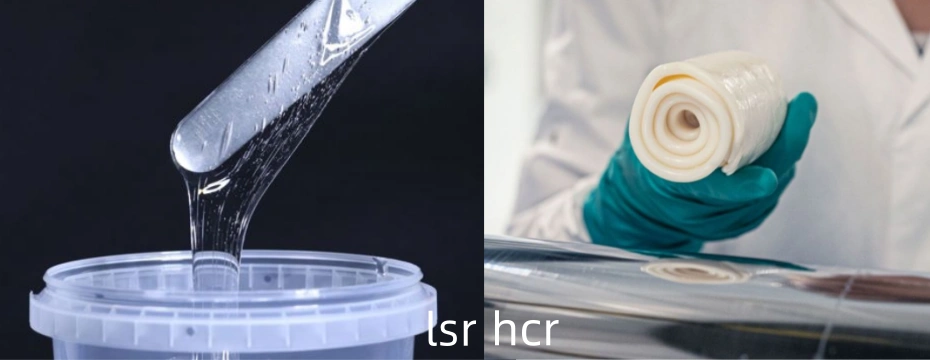
Injection Molding LSR refers to the manufacturing process of producing silicone rubber components using liquid silicone rubber (LSR) through a highly automated injection molding system. This technology allows manufacturers to create precise, flexible, and durable silicone parts with excellent consistency and efficiency.
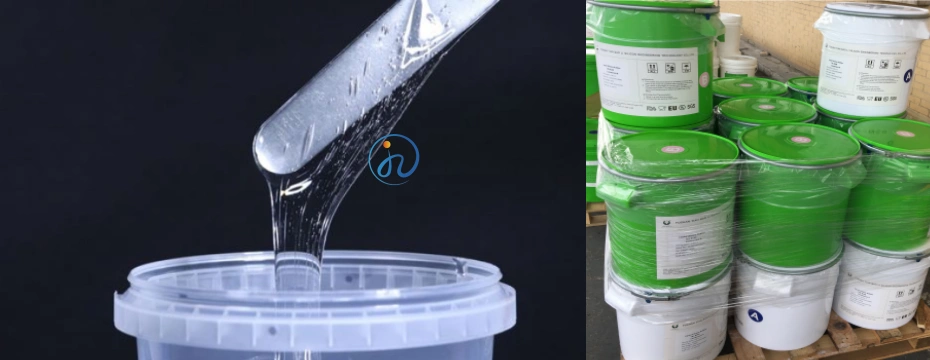
Liquid Silicone Rubber is a two-component platinum-cured elastomer that remains in liquid form before processing. During injection molding, the liquid silicone is mixed, injected into a heated mold cavity, and then cured into a solid elastomer.
Because of its high purity, heat resistance, and excellent mechanical properties, LSR injection molding is widely used in industries such as:
- Medical devices
- Baby care products
- Automotive components
- Consumer electronics
- Food-grade products
Compared with traditional rubber molding techniques, LSR injection molding offers superior precision, automation, and productivity, making it one of the most advanced silicone manufacturing technologies today.
Understanding Liquid Silicone Rubber (LSR)
Liquid Silicone Rubber is a high-performance silicone elastomer designed specifically for injection molding processes.
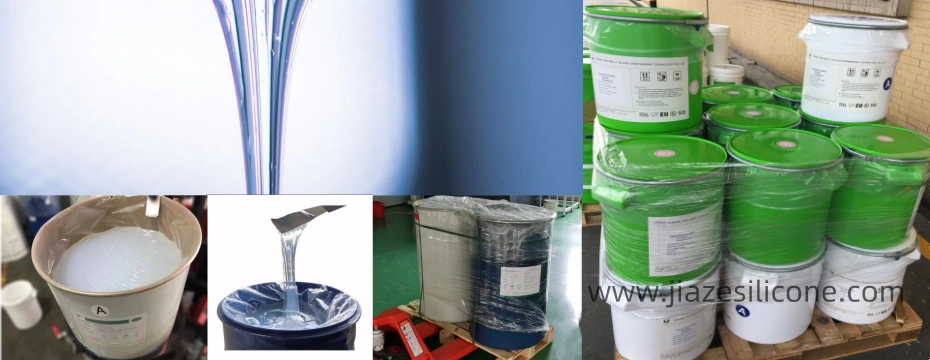
Two-Component System
LSR materials are typically delivering in two separate containers:
- Part A – Base material
- Part B – Catalyst (platinum curing agent)
These two components are mixed in a 1:1 ratio before entering the injection unit.
Key Properties of LSR
LSR materials provide several unique advantages that make them ideal for advanced manufacturing:
Excellent Temperature Resistance
LSR can withstand temperatures ranging from -50°C to 200°C, allowing it to perform in extreme environments.
High Flexibility and Elasticity
Even after repeated deformation, silicone parts maintain their original shape.
Biocompatibility
Medical-grade LSR is using in healthcare products because it is safe for skin contact and sterilization.
Chemical Resistance
LSR resists many chemicals, oils, and moisture, making it suitable for demanding industrial applications.
Long-Term Durability
Silicone rubber does not easily degrade over time, even when exposed to heat or UV light.
Because of these advantages, injection molding LSR has become a preferred process for high-performance silicone products.
How Injection Molding LSR Works
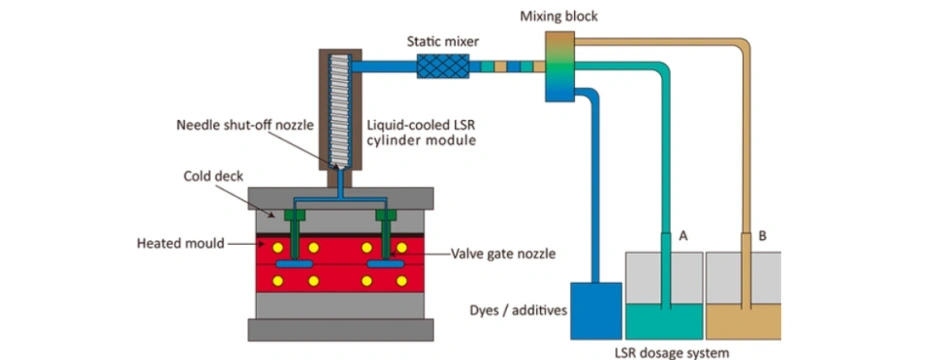
The LSR injection molding process is a highly automated production method designed for precision and efficiency. The process typically includes the following stages.
1. Material Storage and Feeding
LSR materials are stored in sealed containers to prevent contamination. Specialized pumping systems transport the two components from the containers to the mixing unit.
2. Metering and Mixing
The system precisely meters Part A and Part B at a controlled ratio. Static mixers blend the materials to ensure uniform curing during the molding process.
Color pigments or additives can also be introducing during this stage.
3. Injection into the Mold
The mixed silicone is injected into a heated steel mold cavity through a cold runner system. The mold temperature typically ranges from 160°C to 200°C.
The liquid material flows easily into complex cavities, enabling the production of detailed parts.
4. Heat Curing
Inside the mold, the silicone undergoes platinum-catalyzed crosslinking, transforming the liquid material into a solid elastomer.
This curing process usually takes a few seconds to a few minutes, depending on the part size and design.
5. Demolding
After curing, the mold opens and the finished parts are removing. Automated robotic systems are often used to increase efficiency and reduce labor costs.
6. Post Processing
Some parts may require additional finishing processes, such as:
- Flash trimming
- Post curing
- Surface cleaning
- Quality inspection
These steps ensure the final products meet required specifications and performance standards.
Advantages of Injection Molding LSR
Compared with traditional rubber processing methods, injection molding LSR offers numerous advantages.
High Precision and Complex Design Capability
It can produce intricate parts with tight tolerances and complex geometries that are difficult to achieve using compression molding.
High Production Efficiency
The process is highly automated, allowing manufacturers to achieve fast cycle times and high-volume production.
Consistent Quality
Automated mixing and injection ensure uniform material distribution and consistent product quality.
Minimal Material Waste
Cold runner systems reduce silicone waste and improve cost efficiency.
Clean Manufacturing Environment
LSR molding can be performed in cleanroom environments, making it ideal for medical and healthcare products.
These benefits make injection molding LSR the preferred technology for modern silicone product manufacturing.
Common Applications
LSR injection molding is using across multiple industries due to its excellent material performance.
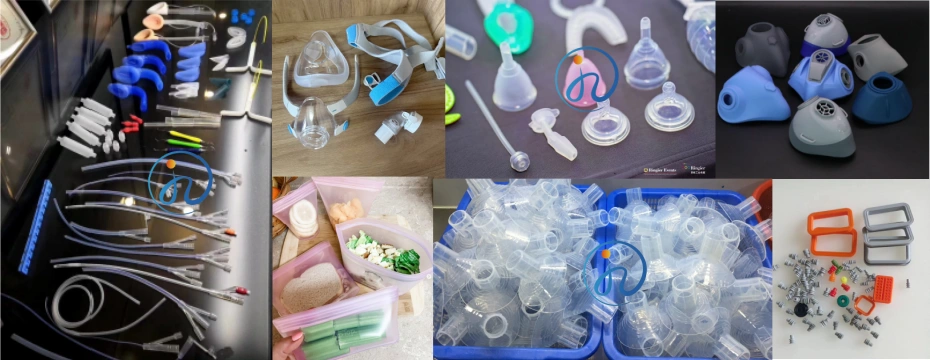
Medical Devices
Medical-grade silicone components require strict quality control and biocompatibility.
Typical products include:
- Catheters
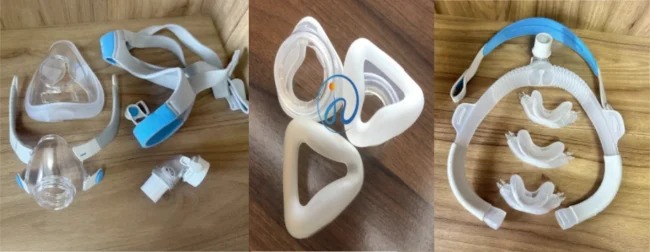
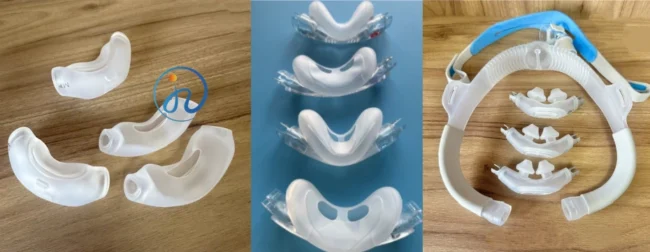
- Respiratory masks
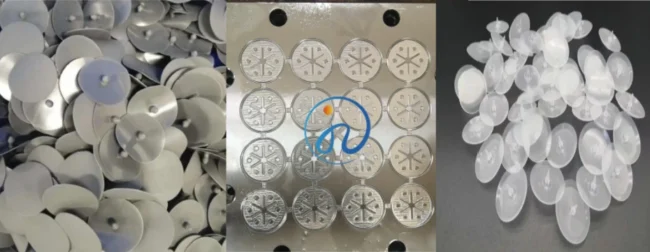
- Sealing membranes
- Medical valves
Baby Care Products
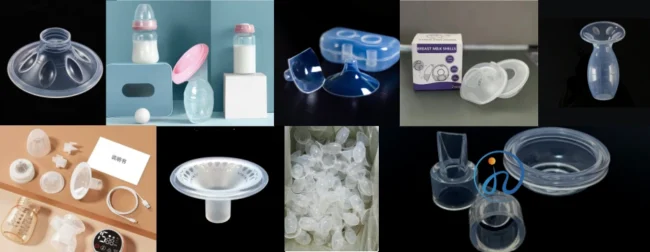
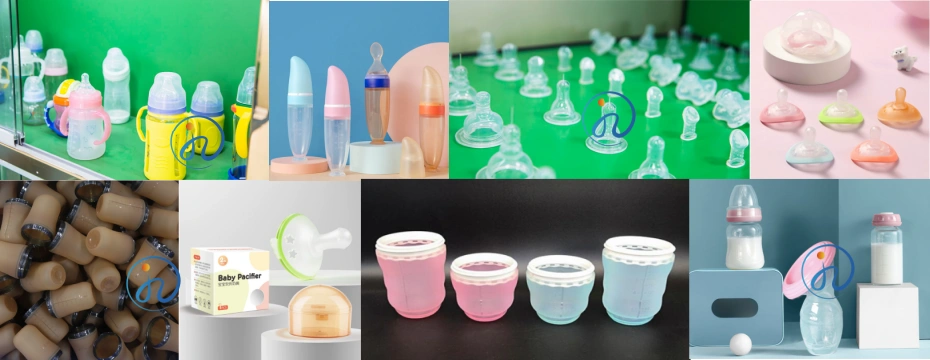
LSR is commonly used in baby products because it is soft, non-toxic, and durable.
Examples include:
- Baby bottle nipples
- Pacifiers
- Teething toys
- Baby feeding spoons
Automotive Components
Silicone parts are widely used in automotive applications that require heat resistance and flexibility.
Examples include:
- Sealing gaskets
- Electrical connectors
- Sensor covers
Consumer Electronics
Examples include:
- Waterproof seals
- Button keypads
- Protective covers
Food-Grade Products
Food-safe LSR materials are using in kitchen and food-contact products.
Examples include:
- Baking molds
- Silicone spatulas
- Sealing rings for food containers
These applications highlight the versatility of injection molding LSR technology.
Injection Molding LSR vs Compression Molding
Although both processes are used for silicone manufacturing, they differ significantly.
LSR Injection Molding
- Highly automated process
- Suitable for complex designs
- Faster cycle times
- Ideal for high-volume production
Compression Molding
- Manual or semi-automatic process
- Simpler mold structures
- Longer production cycles
- Suitable for lower-volume production
Because of its efficiency and precision, LSR injection molding is increasingly replacing traditional compression molding for many applications.
Choosing the Right LSR Injection Molding Manufacturer
Selecting the right manufacturing partner is essential for successful silicone product development.
When evaluating suppliers, consider the following factors:
Technical Expertise
An experienced manufacturer should have deep knowledge of LSR materials, mold design, and injection molding technology.
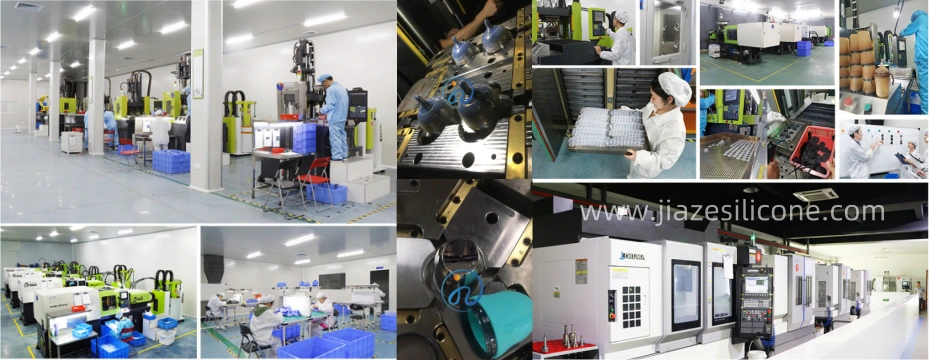
Engineering Support
Professional engineering teams can assist with:
- Design for manufacturability (DFM)
- Prototype development
- Mold optimization
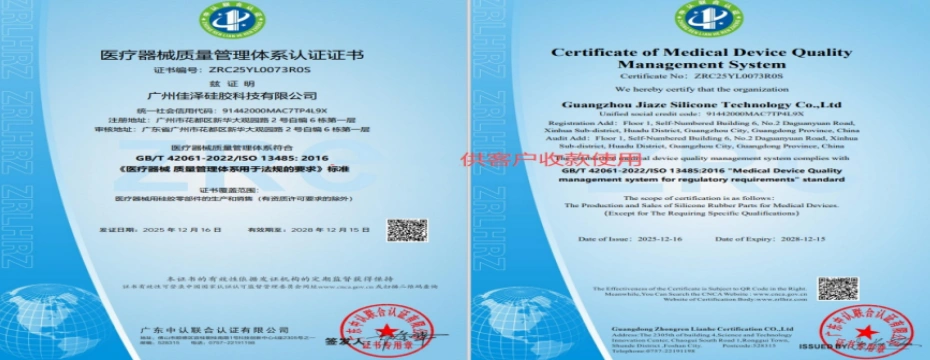
Quality Certifications
Reliable manufacturers typically operate under quality systems such as:
- ISO 9001
- ISO 13485 (medical manufacturing)
Advanced Equipment
Modern injection molding machines ensure stable production and consistent quality.
Production Capacity
A capable supplier should support both small prototype runs and mass production.
Partnering with a professional LSR manufacturer can significantly reduce product development risks.
Conclusion
Injection Molding LSR is an advanced manufacturing process used to produce high-performance silicone rubber components with excellent precision and efficiency.
By combining liquid silicone rubber materials with automated injection molding technology, manufacturers can produce durable, flexible, and safe parts for industries such as medical devices, baby products, automotive systems, and consumer electronics.
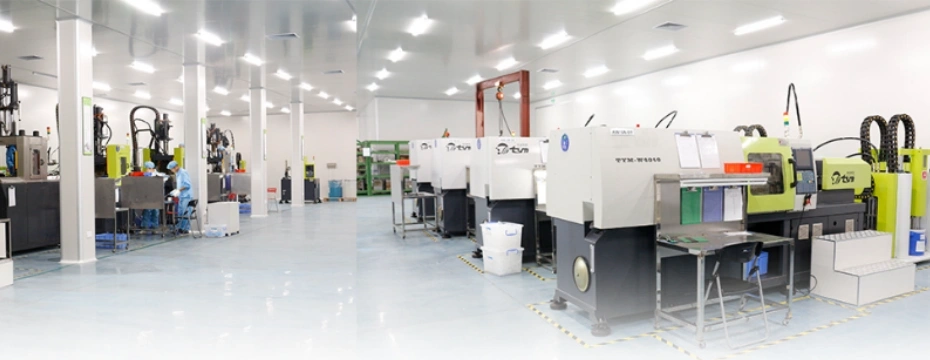
With its ability to support complex designs, high production efficiency, and consistent product quality, It has become one of the most important technologies in modern silicone manufacturing.
For companies looking to develop innovative silicone products, partnering with an experienced LSR injection molding manufacturer is essential to ensure successful product development and large-scale production.