Liquid Silicone Rubber (LSR) injection molding has become one of the most advanced manufacturing technologies for producing precision silicone components. Among its many capabilities, LSR overmolded stands out as a powerful solution for combining silicone with plastic, metal, or electronic components into a single integrated product.
LSR overmolded parts are used in medical devices, automotive sealing systems, wearable electronics, baby care products, and industrial equipment because they offer excellent sealing performance, durability, ergonomic comfort, and biocompatibility.
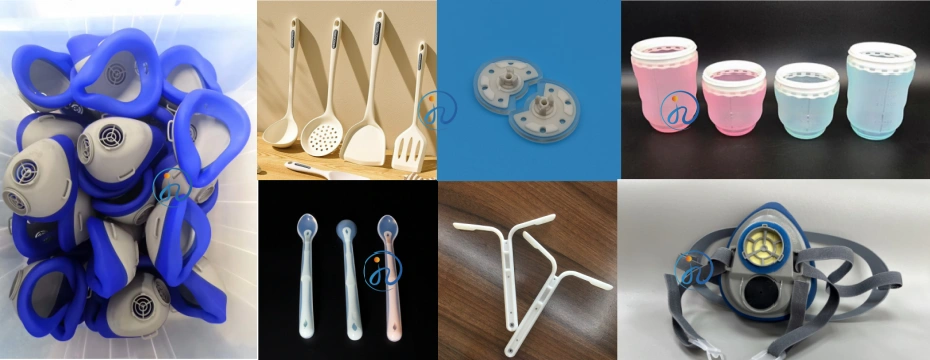
In this guide, we will explain everything engineers and buyers need to know about LSR overmolded parts — including processes, materials, advantages, design tips, tooling considerations, and manufacturing challenges.
Definition of LSR Overmolding
LSR overmolded parts refer to components manufactured by injecting liquid silicone rubber onto or around another substrate material such as thermoplastics, metals, or electronic assemblies.
Instead of assembling multiple parts separately, overmolding bonds silicone directly onto another component during molding.
Typical substrates include:
- PC (Polycarbonate)
- PA (Nylon)
- Stainless Steel
- Aluminum
- Glass fiber reinforced plastics
- Electronic PCB modules
The result is a single integrated component with multiple material properties.
How Does LSR Overmolding Work?
Substrate Preparation
The base component is manufactured first.
This may be produced by:
- Plastic injection molding
- CNC machining
- Metal stamping
- Electronic assembly
Surface cleanliness is critical. Oil or dust contamination reduces bonding strength.
Insert Loading
The substrate is manually or robotically placed into the LSR mold. Automation is common in high-volume manufacturing.
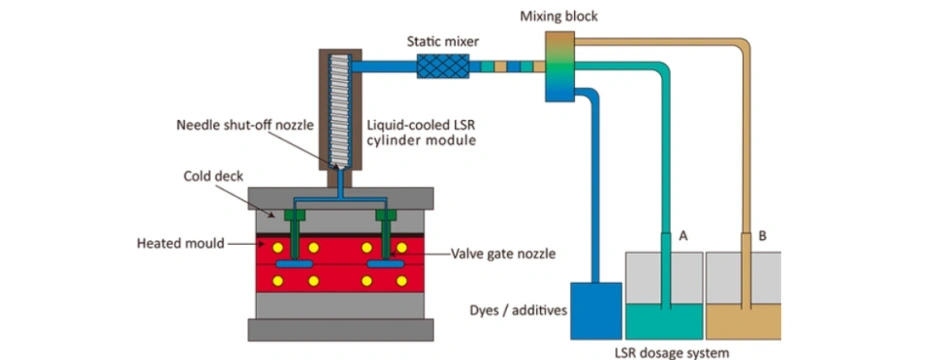
Liquid Silicone Injection
LSR is a two-component material:
- Part A
- Part B
These components are mixed in a static mixer and injected through a cold runner system.
Unlike thermoplastics:
- Mold temperature is hot (150–200°C)
- Material remains cold before injection.
Silicone cures rapidly inside the mold.
Chemical Adhesion
Some materials chemically bond with silicone during curing.
Examples:
- PC
- PBT
- PA
Primer treatment may enhance adhesion.
Demolding
After curing:
- Automatic demolding systems remove parts.
- Flashless tooling ensures minimal trimming.
Finished parts are ready for use.
Why Choose LSR Overmolded Parts?
Superior Sealing Performance
Silicone provides excellent compression set resistance. Applications include:
- Waterproof connectors
- Valve seals
- Medical diaphragms
Ergonomic Soft Touch
Overmolded silicone offers:
- Anti-slip grip
- Comfortable handling
Common products:
- Electric toothbrush handles
- Surgical instruments.
Biocompatibility
Medical grade LSR meets:
- ISO 10993
- USP Class VI standards.
Ideal for skin-contact applications.
Extreme Temperature Resistance
LSR operates between:
- −50°C to 200°C.
Suitable for automotive engine compartments.
Chemical Resistance
LSR resists:
- UV
- Sterilization chemicals
- Moisture.
Common Materials Compatible With LSR Overmolding
Thermoplastics
Typical bonding partners:
- Polycarbonate (PC)
- Nylon (PA6/PA66)
- Polypropylene (PP)
- PEEK.
Material compatibility testing is recommended.
Metal Inserts
Metals commonly used:
- Stainless steel
- Aluminum
- Brass.
Used in:
- Surgical instruments
- Automotive sensors.
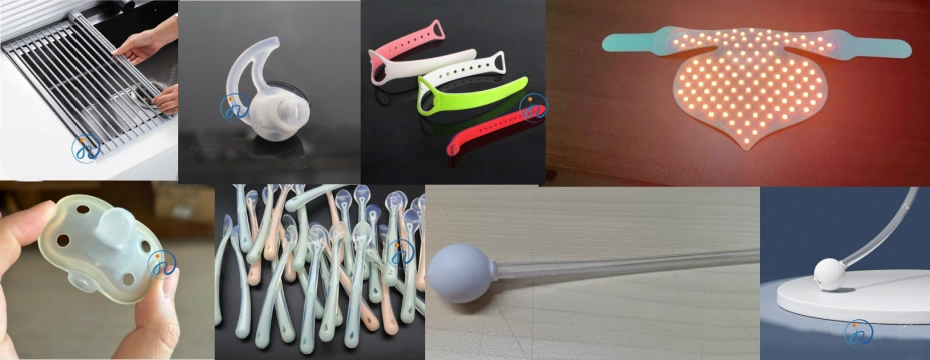
Electronic Components
Silicone protects:
- PCB boards
- Sensors
- Connectors.
Benefits include waterproofing and vibration resistance.
Applications of LSR Overmolded Parts
Medical Industry
- Catheters
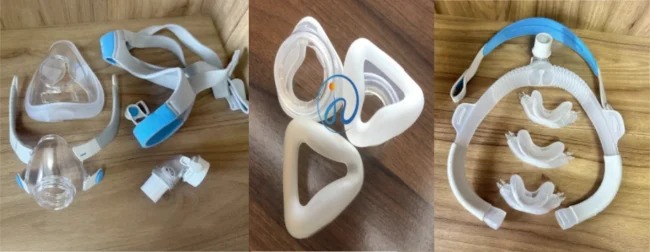
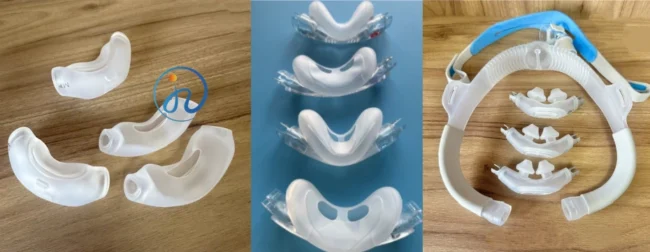
- Respiratory masks
- Surgical handles
- Sealing valves.
Sterilization compatibility makes LSR ideal.
Automotive Industry
Examples:
- Sensor housings
- Waterproof connectors
- Battery seals.
EV vehicles increasingly adopt LSR.
Consumer Electronics
Used in:
- Smart watches
- Charging ports
- Waterproof switches.
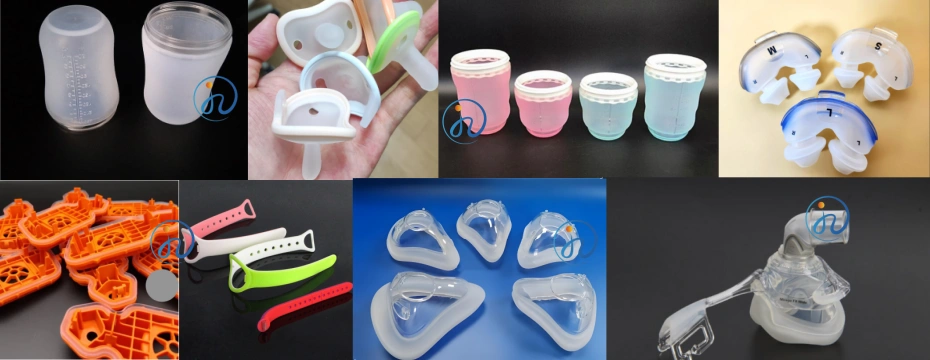
Baby and Consumer Products
Examples:
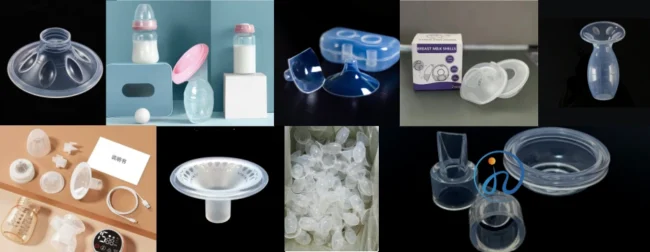
- Baby bottle components
- Wearables
- Kitchen accessories.
Soft touch safety improves usability.
Cost Factors of LSR Overmolded Parts
Major cost drivers:
- Tool complexity.
- Automation level.
- Material grade.
Medical LSR molds cost more due to validation requirements.
However, eliminating assembly reduces overall product cost.
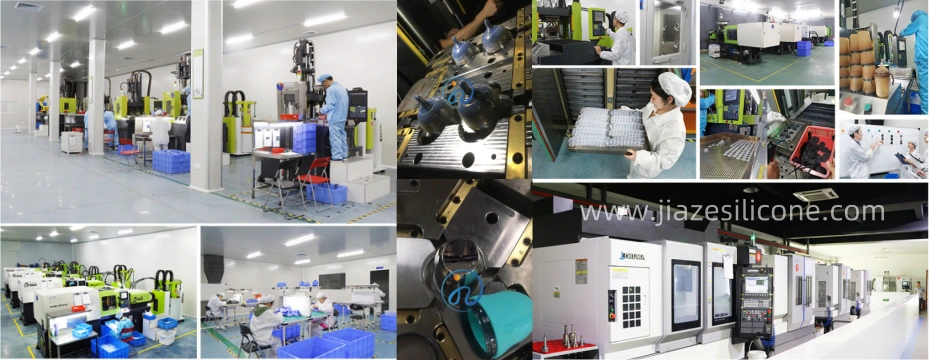
How to Choose an LSR Overmolding Manufacturer?
Look for:
- Medical certifications.
- Automation capability.
- Mold design expertise.
- Cleanroom production.
Engineering support is critical during development.
Conclusion
LSR overmolded parts provide a powerful solution for combining soft silicone performance with structural materials such as plastics, metals, or electronics. By integrating sealing, ergonomics, and durability into a single component, manufacturers can reduce assembly costs while improving product reliability.
With increasing demand in medical, automotive, and smart electronics industries, LSR overmolding will continue to be one of the fastest-growing advanced manufacturing technologies.
We are a professional Liquid Silicone Rubber (LSR) injection molding manufacturer, providing one-stop solutions from mold design to mass production.
With rich experience in custom LSR molded components, we help customers in medical, automotive, electronics, and consumer industries achieve high precision, stable quality, and cost-efficient production.
Looking for a reliable LSR partner? Let’s build your next project together.