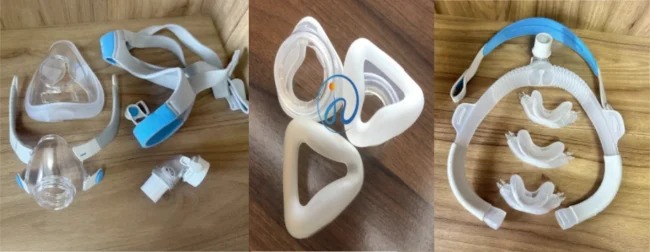
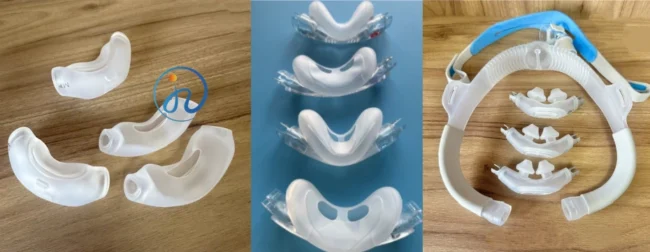
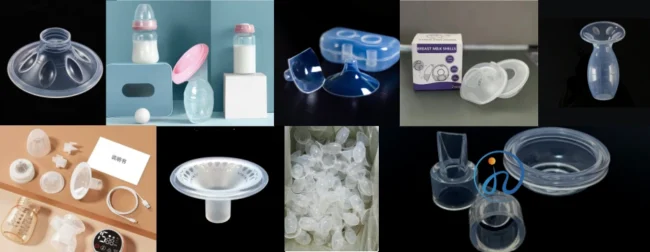
RTV vs. LIM is widely used in medical devices, automotive components, consumer products, seals, kitchenware, and industrial applications. However, choosing the right silicone manufacturing process can significantly affect product quality, production efficiency, tooling cost, and unit price.
Two common silicone manufacturing methods are RTV (Room Temperature Vulcanizing) and LIM (Liquid Injection Molding). Although both processes use liquid silicone materials, they are designed for different production requirements.
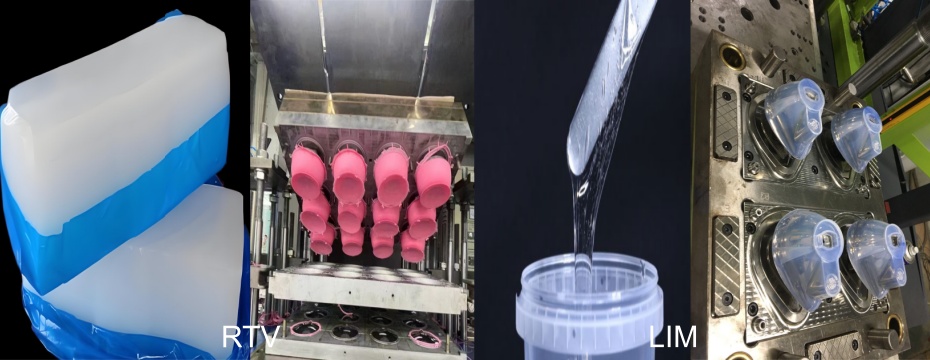
Understanding the differences between RTV and LIM can help product developers, engineers, and purchasing teams select the right manufacturing solution.
What Is RTV Silicone?
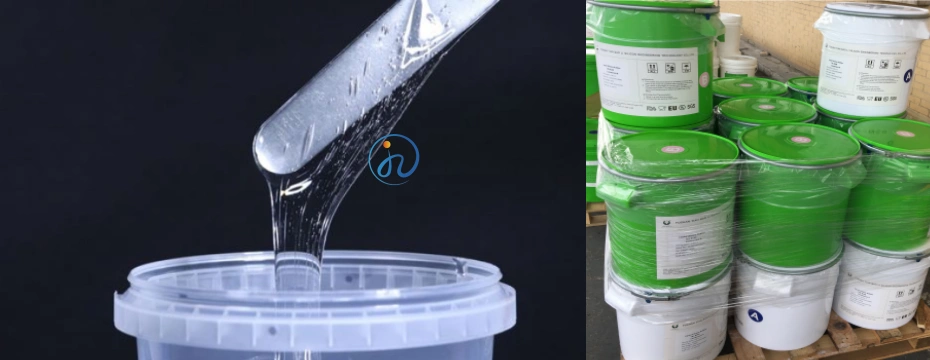
RTV stands for Room Temperature Vulcanizing. RTV silicone is generally a liquid or paste-like silicone material that cures at room temperature or with additional heat.
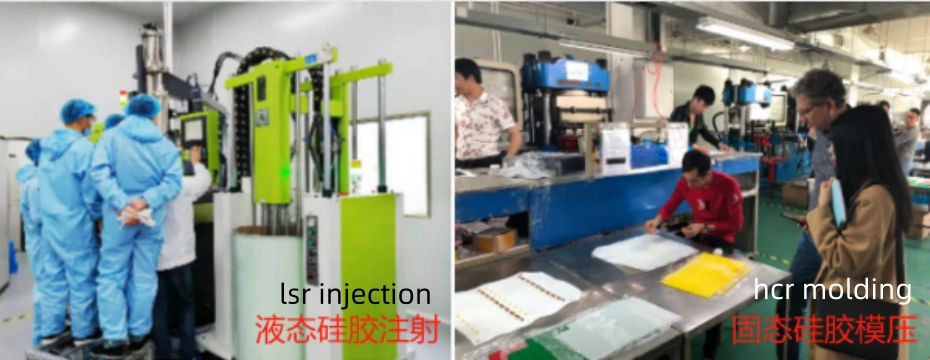
HCR silicone can be applied, poured, dispensed, or cast into a mold. After the material cures, the finished silicone part is removed from the mold.
RTV is commonly used for:
- Prototypes and product development
- Low-volume production
- Silicone casting
- Sealing and bonding
- Customized silicone components
- Complex products that require relatively simple tooling
One major advantage of RTV is its flexibility in production. Tooling can often be produced relatively quickly and at a lower initial cost than injection molding tools.
However, RTV production is generally more labor-intensive and slower than automated liquid silicone injection molding.
What Is LIM?
LIM stands for Liquid Silicone Rubber Injection Molding. It is an automated manufacturing process specifically designed for processing two-component liquid silicone rubber.
During the LIM process, the silicone components are accurately mixed and injected into a precision mold under controlled conditions. The material then cures inside the mold before the finished part is automatically or semi-automatically demolded.
LIM is widely used for high-volume silicone production, including:
- Medical silicone components
- Automotive seals and gaskets
- Baby and maternal products
- Consumer silicone products
- Industrial seals
- Respirator and mask components
- LSR overmolding applications
Compared with RTV, LIM provides much better control over material dosing, injection pressure, temperature, curing conditions, and cycle time.
RTV vs. LIM: Key Differences
The main difference between RTV and LIM is the manufacturing process and production objective.
| Factor | RTV | LIM |
|---|---|---|
| Process | Casting / dispensing / molding | Automated liquid injection molding |
| Tooling | Relatively simple | Precision injection mold |
| Production volume | Low to medium | Medium to high |
| Automation | Limited to moderate | High |
| Cycle time | Relatively long | Short |
| Dimensional consistency | Moderate | High |
| Labor requirement | Higher | Lower |
| Initial tooling investment | Lower | Higher |
| Mass production efficiency | Limited | Excellent |
For small quantities or prototypes, RTV can be a practical solution because the initial tooling investment may be lower.
For large-scale production, LIM can provide better repeatability, automation, and production efficiency.
RTV vs. LIM: Cost Considerations
Cost is one of the most important factors when comparing RTV and LIM.
RTV may have a lower initial tooling cost, making it attractive for prototypes or low-volume projects. However, manual dispensing, pouring, curing, trimming, and inspection can increase labor costs.
LIM usually requires a more sophisticated mold and injection molding system. Therefore, the initial investment can be higher. However, once the mold and process are validated, automated production can significantly reduce labor costs and improve production efficiency.
For high-volume projects, the higher initial tooling investment of LIM can potentially be distributed across a large production quantity.
Therefore, companies should evaluate total production cost, rather than comparing tooling cost alone.
Which Process Provides Better Precision?
For applications requiring tight dimensional tolerances and consistent part-to-part quality, LIM is generally more suitable.
The LIM process uses controlled material metering, injection parameters, mold temperature, curing time, and automated production conditions. This helps maintain consistent product dimensions and physical properties during mass production.
RTV can produce high-quality silicone parts, but the final consistency can depend more heavily on the dispensing, casting, curing, and operator-controlled processes.
For products requiring repeatable dimensions across thousands or millions of parts, LIM is often considered a more suitable manufacturing approach.
When Should You Choose RTV?
RTV may be suitable when:
- You need prototypes quickly
- Production quantities are relatively low
- Tooling investment needs to be minimized
- The product design is still being developed
- Manual or semi-automatic production is acceptable
- Complex casting or bonding is required
RTV is particularly useful during the early product-development stage when design changes are expected.
When Should You Choose LIM?
LIM is generally more suitable when:
- You need medium- or high-volume production
- Consistent product quality is important
- Tight dimensional control is required
- Automated production is preferred
- Labor costs need to be controlled
- The product requires repeatable mass production
- Silicone overmolding is required
For medical, automotive, industrial, and consumer products with long-term production requirements, LIM can provide a more scalable manufacturing solution.
RTV vs. LIM: Which One Is Right for Your Project?
There is no single silicone molding process suitable for every application.
If you are developing prototypes or producing relatively small quantities, RTV may offer a simpler and more economical manufacturing route.
If your project requires precision tooling, stable production, high repeatability, and mass production, LIM can be a more appropriate solution.
When making the decision, consider not only the initial mold cost but also production volume, cycle time, labor, dimensional requirements, material consumption, quality consistency, and long-term production cost.
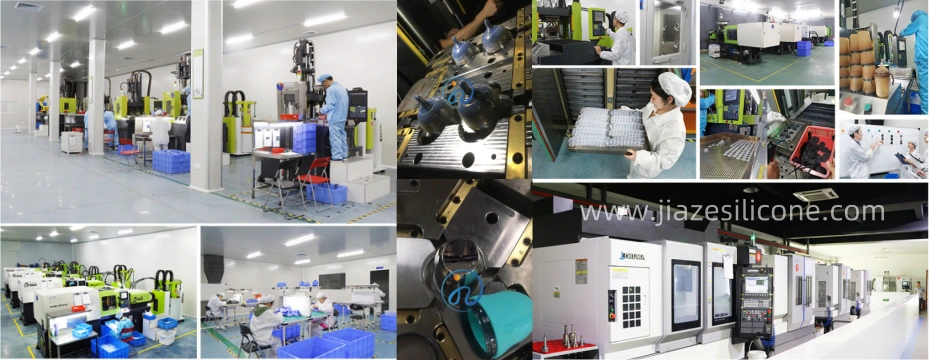
For companies planning large-scale LSR production, working with an experienced LIM / LSR injection molding manufacturer can also help optimize the mold design and production process before mass production begins.
Conclusion
RTV and LIM are both important silicone manufacturing processes, but they serve different production needs.
RTV is commonly associated with prototyping, casting, low-volume production, and flexible manufacturing. LIM focuses on automated liquid silicone injection molding, precision tooling, repeatability, and efficient mass production.
Understanding these differences early in the product-development process can help engineers and purchasing teams choose an appropriate silicone manufacturing method while controlling both quality and overall production costs.